
Grinders are essential power tools in many workshops, construction sites and industrial environments. They are used for cutting, shaping, polishing and removing material from different surfaces. From smoothing metal edges to preparing concrete and removing rust, the right grinder can make demanding tasks faster and more precise.
However, not all grinders are designed for the same purpose. Different models vary in power source, motor performance, disc size and handling characteristics. Choosing suitable equipment requires an understanding of the material being worked on, the level of precision required and the conditions in which the tool will operate.
Whether used by professional tradespeople or maintenance teams, understanding the available grinder types can help improve productivity and achieve better results.
What Are Grinders and How Do They Work?
Grinders are powered tools that use a rotating abrasive wheel, disc or attachment to remove material from a workpiece. Depending on the tool design and accessory fitted, they can perform tasks such as grinding, cutting, sanding, polishing and surface preparation.
Most electric grinders use a motor to rotate the attached disc at high speed. When the abrasive accessory makes contact with the material, it removes small amounts of material through friction and abrasion.
The type of disc or attachment is important. A cutting disc, for example, is designed for cutting compatible materials, while a grinding wheel is intended for material removal and surface finishing. Accessories should always be matched to the tool, material and intended operation.
Different Types of Power Grinders
Grinders are available in several designs, each suited to particular applications. Understanding their differences makes it easier to select the right tool for a specific job.
1. Angle Grinders
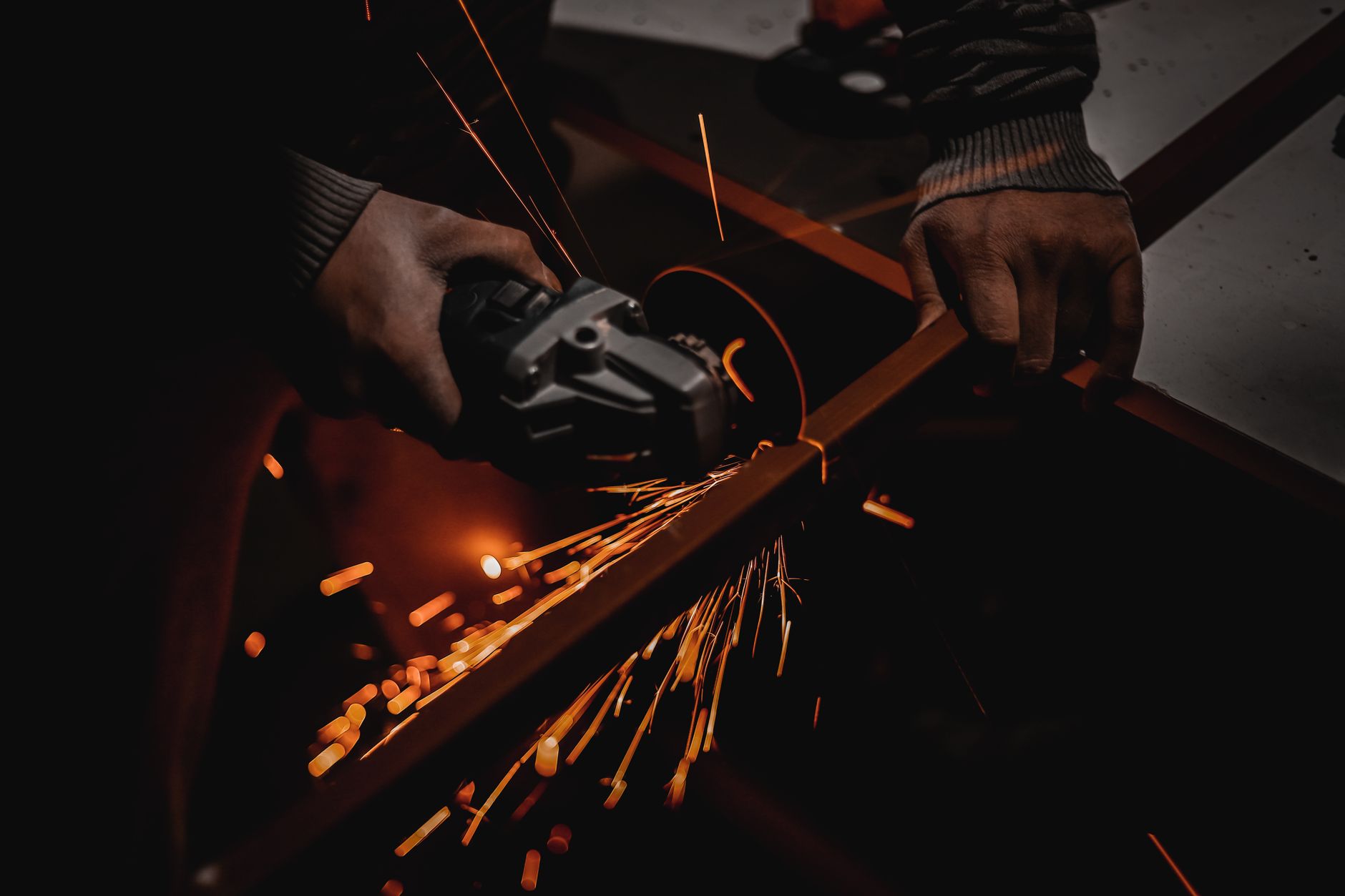
Angle grinders are among the most widely used handheld grinding tools. They feature a rotating disc mounted at an angle to the motor housing, making them suitable for working on metal, masonry and other compatible materials.
Common applications include cutting metal pipes, removing welds, grinding sharp edges, cleaning rust and preparing surfaces before painting or fabrication.
Angle grinders are available in different disc sizes. Smaller models are generally easier to handle in confined spaces, while larger models can accommodate bigger discs for more demanding applications.
2. Die Grinders
Die grinders are compact tools designed for detailed work and precision material removal. They typically use smaller accessories, such as mounted grinding stones, carbide burrs and polishing attachments.
They are commonly used for deburring, smoothing internal surfaces, finishing metal components and working in areas that are difficult to reach with larger grinders.
Die grinders are available in electric, cordless and pneumatic configurations. Their compact design makes them useful in automotive workshops, fabrication facilities and maintenance operations.
3. Bench Grinders
Bench grinders are stationary tools mounted on a workbench or suitable support. They usually feature two rotating abrasive wheels, which can be selected for different grinding tasks.
They are often used for sharpening tools, shaping metal components, removing burrs and maintaining workshop equipment.
Because the workpiece is brought to the machine, bench grinders can provide a stable working arrangement for suitable tasks. Users should ensure that the tool is securely mounted and that the correct guards and protective equipment are in place.
4. Cordless Grinders
Cordless grinders operate using rechargeable batteries rather than a direct mains connection. They are particularly useful for on-site work, maintenance activities and locations where access to electrical outlets is limited.
Modern battery-powered models can offer substantial performance, especially when equipped with brushless motors. However, battery capacity, charging time and operating duration should be considered when selecting a model for extended work.
5. Pneumatic Grinders
Pneumatic grinders use compressed air to operate. They are frequently used in industrial facilities and automotive workshops that already have compressed air systems.
These tools can be compact and lightweight, making them suitable for precision work and repeated workshop applications. Their performance depends on having an appropriate air supply, including sufficient pressure and flow.
Common Applications of Grinders Across Industries
Grinders support a wide range of activities because they can be adapted to different materials and finishing requirements.
Metal fabrication: Workers use grinders to remove weld spatter, smooth edges, prepare joints and cut metal sections. These operations help prepare components for further manufacturing or assembly.
Construction: Grinders can be used for cutting compatible masonry materials, removing surface irregularities and preparing concrete or stone before installation and finishing.
Automotive maintenance: In vehicle repair workshops, grinders help remove rust, clean metal surfaces, reshape components and prepare areas for welding or refinishing.
Manufacturing: Production facilities use grinding tools for deburring, surface finishing and adjusting metal components to meet manufacturing requirements.
Woodworking and renovation: With suitable accessories and equipment designed for the material, certain grinding tools can support sanding and surface preparation tasks. Users must check tool and accessory compatibility before use.
Corded vs. Cordless Grinders: Which Is Better?
The choice between corded and cordless grinders depends largely on the working environment and the duration of use.
Corded grinders receive continuous power from a mains supply. They are useful for extended workshop tasks where consistent power is required and battery charging is not practical. However, the cable can restrict movement and needs to be managed carefully.
Cordless grinders offer greater portability and flexibility. They are particularly convenient for construction sites, outdoor maintenance and work in areas where power outlets are difficult to access. Their operating time is limited by battery capacity, so additional batteries may be necessary for longer jobs.
Neither option is automatically better. Professionals should consider power requirements, working duration, mobility and the availability of charging or electrical facilities.
Important Factors When Choosing Grinders Power Tools
Selecting suitable grinders power tools involves more than comparing motor wattage or product prices. The following specifications can influence performance, safety and long-term value.
Disc Size and Speed
Disc size determines the type of accessories that can be fitted and influences the cutting depth or working area. Common handheld angle grinder sizes include 100 mm, 115 mm, 125 mm and 230 mm.
Rotational speed, measured in revolutions per minute (RPM), is another important specification. Always ensure that the accessory's maximum permitted speed is equal to or greater than the tool's operating speed.
Motor Power
Motor power affects the tool's ability to handle demanding applications. Higher-powered models may be more suitable for sustained material removal and heavier workloads, although power should be considered alongside tool design, torque and intended use.
Brushless motors can offer improved efficiency and reduced maintenance requirements compared with many brushed designs. The actual benefits depend on the tool and operating conditions.
Ergonomics and Weight
A grinder should be comfortable to hold and control. Consider the tool's weight, grip design, handle position and vibration levels, particularly when it will be used for extended periods.
Features such as adjustable side handles and vibration-reduction systems can help improve handling.
Safety Features
Look for appropriate protective guards, spindle locks, anti-restart protection and other safety features. Some models also include electronic braking and anti-kickback systems.
The availability and function of these features vary between products, so check the manufacturer's specifications before purchasing.
Essential Safety Practices When Using a Grinder
Grinders operate at high speeds and can produce sparks, dust and flying fragments. Correct operating procedures are therefore essential.
Before starting work, inspect the grinder, power cable or battery, guard and abrasive accessory for damage. Confirm that the disc is suitable for the material and that it is securely fitted.
Wear appropriate personal protective equipment, including safety glasses or a suitable face shield, hearing protection and suitable gloves where required by the task risk assessment. Respiratory protection and effective dust extraction may also be necessary depending on the material being worked on.
Keep the workpiece securely supported and maintain a stable working position. Do not force the tool through the material, and avoid using damaged or incorrectly rated discs.
Always follow the manufacturer's instructions for the specific grinder and accessory. Disconnect the power source or remove the battery before changing accessories or carrying out maintenance.
Finding the Right Grinder for Professional and Industrial Use
Choosing the right equipment becomes easier when suppliers provide access to different brands, specifications and compatible accessories. Buyers should compare disc sizes, power ratings, speed, motor types and safety features before making a decision.
RS Singapore offers a selection of grinders from established manufacturers, including Bosch, DeWALT, Makita, Milwaukee and FEIN. Its online catalogue includes corded and cordless models, angle grinders, die grinders and related accessories for different workshop and industrial requirements.
Reviewing product datasheets and checking compatibility with the intended application can help businesses and individual users make informed purchasing decisions.
Conclusion
Grinders are versatile power tools that support cutting, grinding, polishing and surface preparation across numerous industries. Selecting the right model involves considering the material, application, motor performance, disc size, portability and safety features. With suitable equipment, compatible accessories and proper operating practices, grinders power tools can help improve work efficiency, support consistent finishing and make demanding workshop tasks more manageable.