
Have you ever looked at a photograph of yourself and wondered why you look different from your mirror reflection? This experience is common, especially when comparing selfies with pictures taken by someone else.
It often raises one question: Do people see you inverted?
The short answer is no. Other people see your face in its natural, non-mirrored orientation. Your reflection shows a reversed view, which helps explain why photographs sometimes look unfamiliar.
However, camera distortion, lighting, facial asymmetry, and familiarity also influence how you perceive your appearance.
Do People See You Inverted in Real Life?
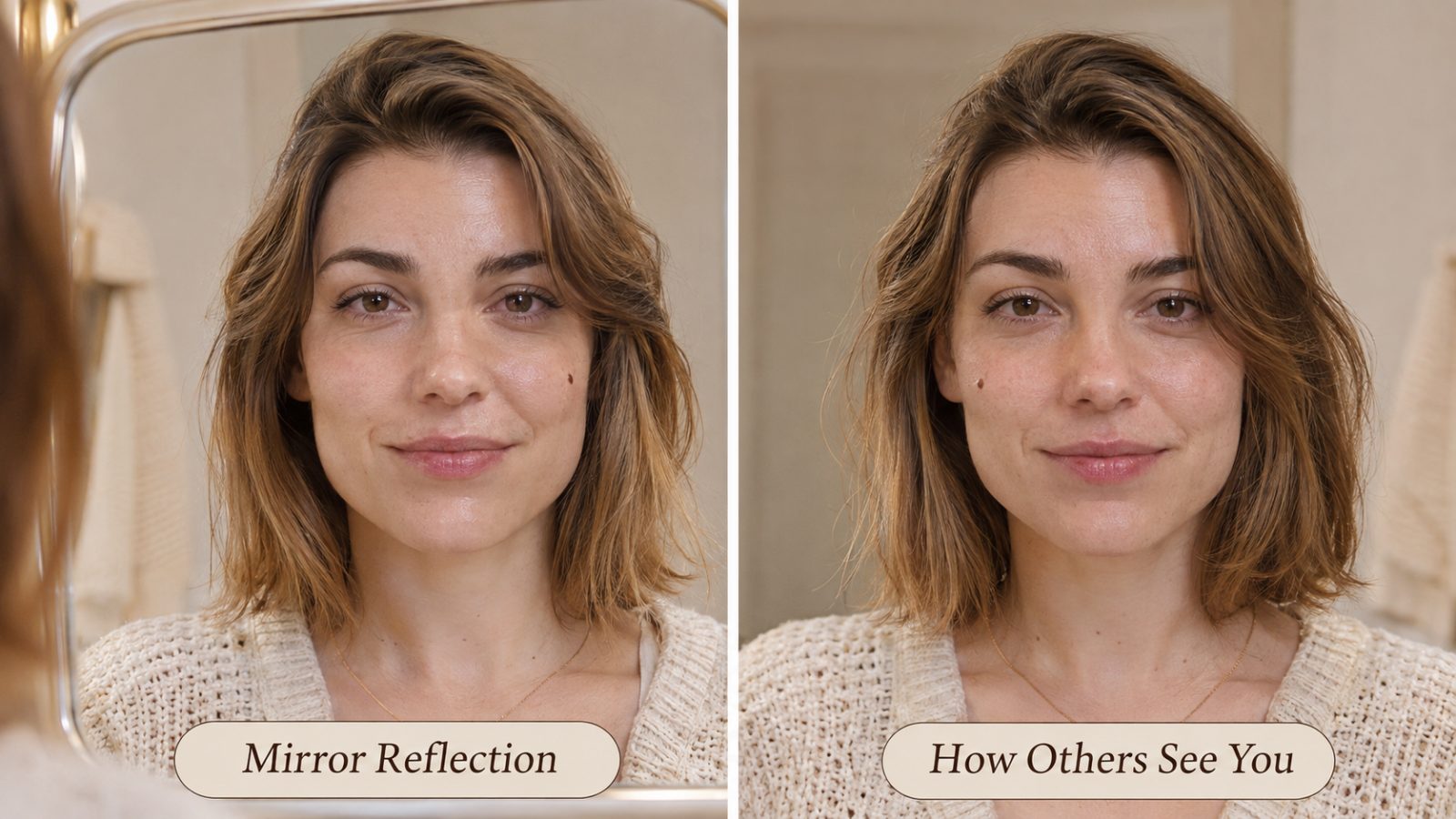
No, people do not see you inverted in real life. They see your face in its natural orientation, while a standard mirror presents a reversed reflection.
For example, if you have a mole on your left cheek, someone standing opposite you sees it on your left cheek. In your reflection, it appears on the opposite side of the image.
This difference becomes noticeable when comparing your reflection with an unmirrored photograph.
However, photographs cannot perfectly reproduce how others see you because real-life perception includes depth, movement, and changing expressions.
Mirror Image vs. How People Actually See Your Face
A mirror reverses the direction perpendicular to its surface. When facing it directly, this creates the familiar appearance of left-to-right reversal.
Your facial features remain unchanged, but their apparent arrangement differs.
Why Your Mirror Image Looks More Familiar
Most people regularly see their reflections while grooming, brushing their teeth, or getting ready.
Repeated exposure makes the mirrored version feel familiar.
An unmirrored photograph presents your features in an arrangement you encounter less frequently, making subtle differences more noticeable.
Does Flipping Your Face Change Its Appearance?
Flipping a photograph changes its orientation without physically altering facial features.
However, most faces have natural asymmetry. One eyebrow may sit higher, or one side of your smile may curve differently.
Reversing these characteristics can make your face appear unfamiliar.
If you're curious about your facial structure, Facefy's face shape analysis tool provides another way to explore facial proportions and overall face shape.
Why Do You Look Different in Photos Compared to the Mirror?
Several factors explain why photographs may look different from your reflection.
1. The Mere Exposure Effect
The mere exposure effect describes our tendency to become familiar with things we encounter repeatedly.
Because you regularly see your mirrored reflection, that orientation may feel more natural.
An unmirrored photograph can seem unusual simply because you are less accustomed to it.
2. Natural Facial Asymmetry
Human faces are rarely perfectly symmetrical.
Common differences include:
- Variations in eyebrow height.
- Differences in eyelid shape.
- Uneven smile movements.
- Subtle cheek or jawline differences.
- Variations in facial proportions.
These characteristics are normal and contribute to individual appearance.
If you're wondering, "Do people see you inverted?" Facefy offers a dedicated symmetry checker that helps users explore visible differences between the two sides of their faces.
By examining facial balance and natural asymmetry, the tool provides additional context for understanding why mirrored and unmirrored images may appear different.
However, facial symmetry is not an objective measurement of beauty.
3. Camera Lens and Distance
Camera perspective significantly influences facial proportions.
When taking close-up selfies, features nearest the camera may appear larger than those farther away.
For example, your nose might look more prominent while your ears appear smaller.
This effect primarily results from camera distance and perspective.
For a more natural-looking portrait, position the camera approximately one to two meters away.
4. Lighting and Camera Angles
Lighting changes how shadows fall across your face.
Overhead lighting can create stronger shadows, while soft window lighting produces gentler transitions.
Camera positioning also matters.
A lower camera angle may emphasize your chin, while a higher angle can change the apparent proportions of your forehead and jawline.
5. Photos Capture a Single Moment
People experience your appearance through expressions, gestures, smiles, and movement.
A photograph freezes one expression from one angle.
An unusual photograph does not necessarily represent how you typically appear.
Mirror vs. Front Camera vs. Real-Life Appearance
Different viewing methods produce different representations of your face.
Mirror: Shows a reversed reflection of your facial appearance.
Front camera preview: Often displays a mirrored image, depending on device settings.
Saved selfie: May be mirrored or unmirrored depending on camera settings.
Rear camera photograph: Usually captures an unmirrored image, although perspective and lighting influence the result.
Real-life interaction: Shows your natural, three-dimensional appearance with movement and expressions.
Does the Front Camera Show How Others See You?
Not always.
Many smartphones display mirrored previews because they resemble familiar reflections.
However, saved photographs may use a different orientation.
Check settings such as "Mirror Front Camera" or "Mirror Selfies" to understand how your device saves images.
Is the Back Camera More Accurate?
A rear camera can produce a more representative portrait when used from an appropriate distance.
However, lighting, perspective, focal length, and image processing still influence photographs.
A portrait taken from a comfortable conversational distance generally provides a better comparison than an extremely close selfie.
How to See Yourself the Way Others See You
You can compare mirrored and unmirrored photographs to understand how orientation influences appearance.
Step 1: Take a Clear Photograph
Position your camera approximately at eye level.
Use soft, even lighting and maintain a relaxed expression.
If possible, ask someone to photograph you from one to two meters away.
Step 2: Compare Mirrored and Unmirrored Versions
Open the photograph in your editing application.
Use the horizontal flip feature to create a mirrored version.
Compare eyebrow positions, hairstyle, smile, and facial proportions.
The unmirrored photograph generally matches the orientation other people see.
Step 3: Explore Your Facial Features With Facefy
Rather than deciding which photograph looks better, examine what actually changes.
Your facial structure remains the same, even when the image orientation changes.
For a deeper understanding of facial proportions and symmetry, Facefy offers AI-powered facial analysis tools that help users explore their natural features.
Its Facefy Face Report provides another way to examine facial characteristics beyond simple image comparisons.
These observations can help explain why different photographs emphasize different features without treating natural asymmetry as a flaw.
Step 4: Compare Different Camera Distances
Take one photograph close to your face and another from farther away.
Notice how the apparent size of your nose, forehead, and jawline changes.
This demonstrates why a single selfie cannot definitively represent your appearance.
Do Other People Think You Look Different From Your Mirror Image?
Other people are accustomed to seeing your face in its non-mirrored orientation.
What feels unfamiliar to you may appear completely normal to them.
Friends and family recognize you through expressions, movements, facial characteristics, and overall appearance.
They are not comparing your face with the reflection you see every morning.
This explains why unmirrored photographs may surprise you without appearing unusual to people who know you.
Frequently Asked Questions
Do people see the flipped version of your face?
People see your natural, non-mirrored orientation rather than the reversed reflection you see in mirrors.
Is the mirror or camera more accurate?
Neither perfectly represents real-life appearance. Mirrors reverse orientation, while cameras introduce perspective effects.
Why does my face look asymmetrical when flipped?
Natural facial asymmetry becomes more noticeable when features appear in unfamiliar positions.
Do people see you like the back camera?
Rear-camera photographs can resemble the orientation others see, but real-life perception includes depth and movement.
Do people see you as more attractive than you see yourself?
There is no universal answer. Attractiveness depends on individual preferences, familiarity, and personal perceptions.
Final Thoughts: How Do People Really See You?
People do not see you inverted. They see your face in its natural orientation, while mirrors show a reversed reflection.
Unmirrored photographs can feel unfamiliar because they present your features differently from the reflection you regularly see.
Camera distance, lighting, facial asymmetry, and perspective can make these differences more noticeable.
Most importantly, no single photograph captures everything about how others experience your appearance.
Your expressions, personality, movement, and interactions all contribute to the impression you create.