

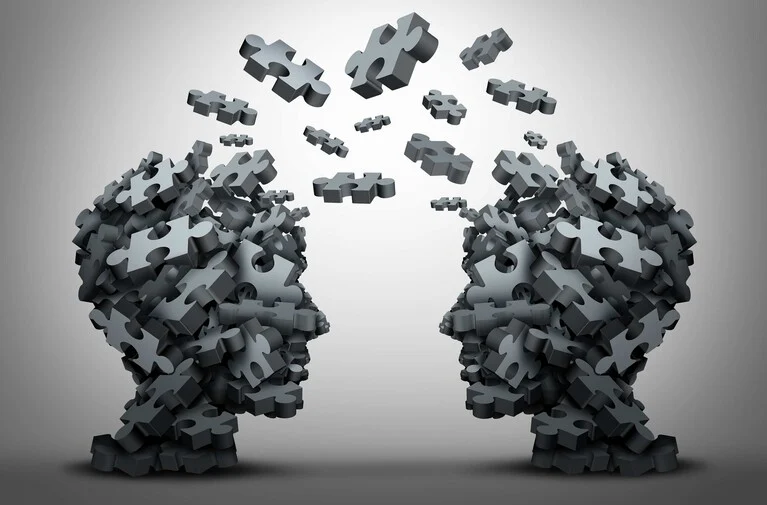
You make a small choice, delay it, and move on. However, hours later, the very same question comes back into your mind. Do you reply to this message? Buy the product? Change your plan? Update once again? Sometimes it seems like a small browser window is open in the brain, and there’s unfortunately no “close all tabs” button.
This inclination is tightly linked to how an individual’s mind reacts to uncertainty, incomplete objectives, attention, and expected rewards. It also helps explain why certain digital experiences are so hard to ignore. Although someone may not be actively seeking to decide, uncertainty and changing information and notifications can keep the question alive in their mind.
When you’re used to the fast pace at Bet Label Italy, this pattern feels especially familiar. The mind is more likely to focus on extra information when no resolution is apparent, whether it’s in following live information, comparing options, watching prices, or waiting for a resolution.
The Psychological Pull of an Unfinished Decision
A decision doesn’t have to be complicated to be incomplete. Sometimes it’s as simple as choosing between two restaurants, or deciding whether to respond to a message right away or later. The key is that something has been set as a goal but not coded as a satisfactory endpoint.
Psychologists have discussed this phenomenon for a long time; it is known as the Zeigarnik effect, which suggests that unfinished tasks may be more accessible in memory than completed ones. At first, it doesn’t seem to work in every instance, and current studies describe it more complicatedly, but the point is worth keeping: An unfulfilled objective can still try to get your attention.
Now close your eyes and say to yourself, “I’ll make my decision tonight.” You take your mind off of the task. The decision remains, however. It has just been temporarily suspended.
This matters because when your brain receives information that may affect your important goals, it will constantly watch what is happening. When it is not decided, the mind will go on asking:
- What’s wrong with me?
- Did I choose correctly?
- Has anything changed?
- What are the consequences of procrastination?
- Damon, would you like me to see it again?
Decisions become harder to make mental closure on the more important or uncertain they are.
Why Uncertainty Keeps the Brain Interested
The human brain is very effective in predicting the future. This predictive machine usually does little work. We expect a traffic light to change, the same road to take us to a familiar place, and the words that come to us from someone after we’ve sent them.
That predictability is broken when there is uncertainty.
If the outcome of a decision is unknown, there is less confidence in predicting the brain’s subsequent state. This creates an opportunity to keep monitoring the situation.
It does not mean that uncertainty necessarily leads to anxiety and/or obsession. At times it just generates interest. When the consequences that may arise are significant, however, dealing with uncertainty can take more cognitive resources.
This is where decision fatigue can come into the picture. If someone is constantly assessing risky decisions during the day, they will likely have less energy to assess other options. It’s not always hard to make any particular decision. What it is is that the brain is always going back to the file it has already opened.
Why Changing Numbers Capture Attention
Perhaps nothing has changed. However, change is possible, so checking is psychologically appealing. It can be the news, social media, financial information, sports news, or anywhere information updates frequently. The question that pops up in the mind is: “Has the unresolved state finally been resolved?”
Without needing to be the subject of gambling, the pattern might be even more recognizable to those familiar with interfaces associated with gambling. The numerical information, uncertainty, and number-based feedback show how sensitive humans are to incomplete information.
For instance, on an online amusement platform, an individual might come across a brand called Hell Spin. The most interesting question from a behavioral perspective is not whether the brand is intrinsically interesting. It’s the ability of digital interfaces to display evolving information, expectations, and feedback in a way that sustains attention. A few numbers stand out when you read through them. Some numbers grab your attention when you read through them. Numbers play a special part in digital decision-making since they provide a tangible expression of uncertainty.
If you have a static number in your system, it’s easy to work with. If you see a changing number, it means that it is still being developed. For instance, betting odds can change over time. It’s not just a number that the person watching the odds is observing. They infer the number’s meaning, compare it with past information, and speculate about the likelihood of it changing again. This is not just a matter of any one industry – dynamic information leads to monitoring. If the answer is still up in the air, the brain is motivated to keep searching.