

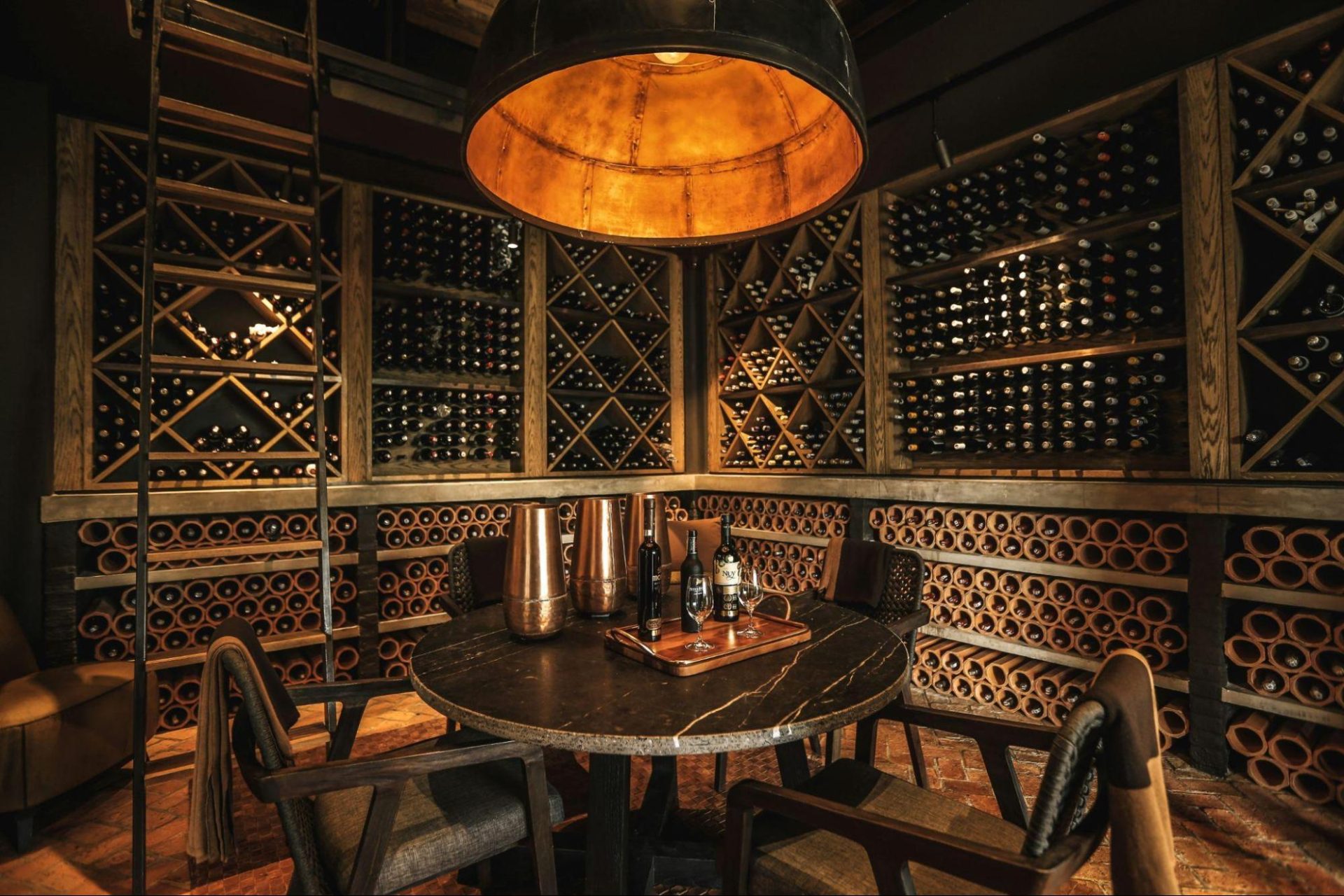
The best wine cellars have an almost cinematic quality. Behind a handsome door there is a cool, low-lit world of bottle-lined walls, stone underfoot, and the pleasant sense that something excellent is waiting to be savoured. A cellar may be an afterthought in some homes, but in some cases, it can easily become one of the most interesting spaces in the whole house. For a true wine lover, the art of storing bottles isn’t just an aesthetic choice, but a question of practicality.
First, Create the Right Atmosphere
Before selecting a single shelf, get the climate right. A cellar should feel almost still: consistently cool, gently humid, and protected from sunlight, heat and vibration. The magic number most wine professionals return to is approximately 55°F, or 13°C, for long-term storage. Humidity should generally sit between 55 and 70 per cent, enough to protect corks without encouraging dampness.
Consistency is of utmost importance. A wine cellar is not a refrigerator; it is a controlled environment built for patience. Sudden shifts in temperature are far more troublesome than a degree or two either way, which is why a proper cooling system, insulation and vapour barrier should be resolved before the decorative work begins.
Let the Collection Set the Tone
The most compelling cellars are not designed around a generic image of what wine storage should be. They are designed around the people who will use them. A collector who buys Burgundy by the case will need a different configuration from one who loves Champagne, large-format Italian reds, or the occasional bottle discovered on holiday.
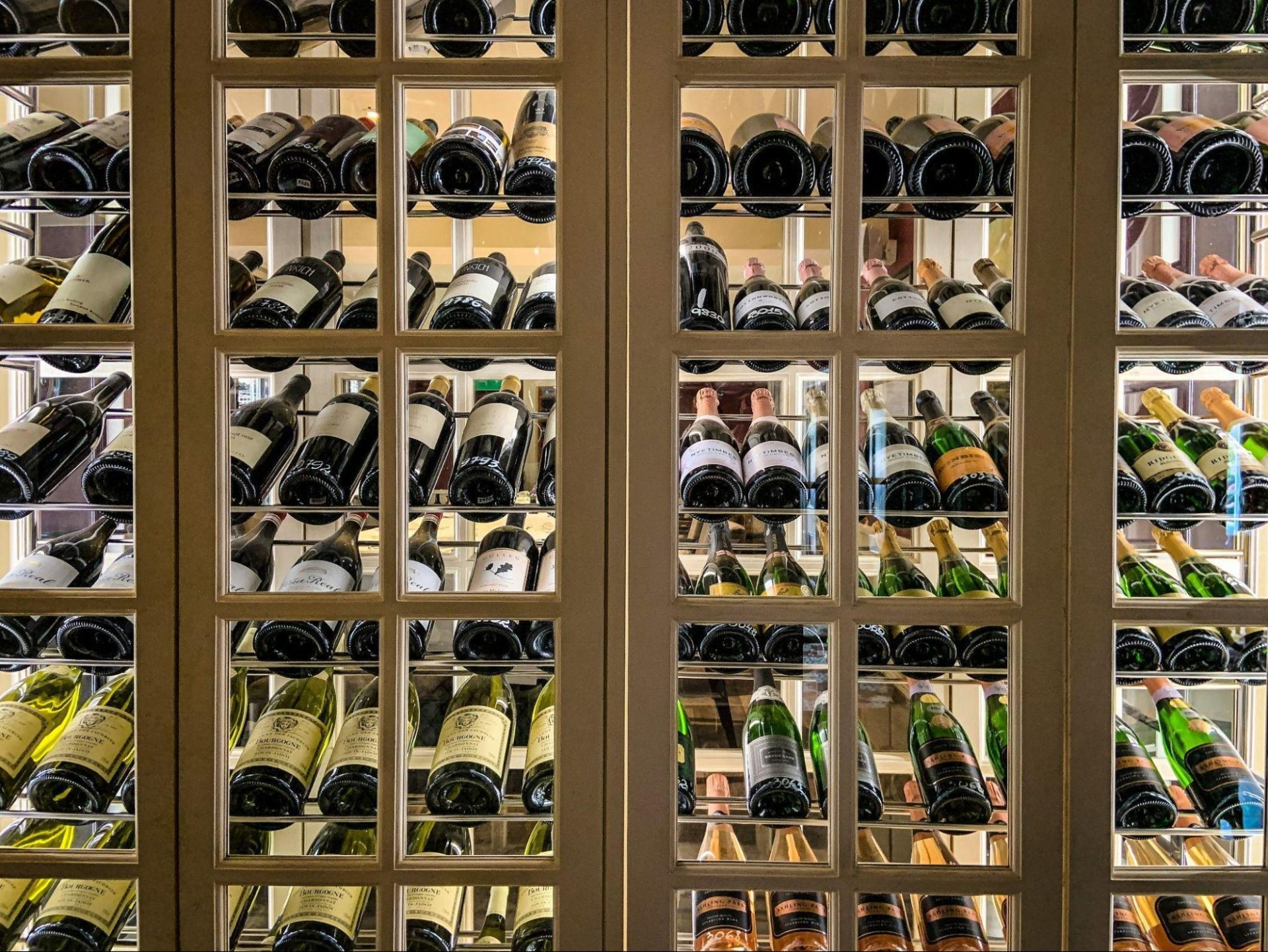
There should be a sense of order, but never rigidity. Reserve deep storage for bottles intended to age, using case bins or horizontal racks that keep corks hydrated. Keep a more accessible area for weeknight favourites and wines that are nearing their drinking window. A few carefully lit display niches can be devoted to magnums, rare bottles or labels with sentimental pull.
Choose Materials With a Point of View
Wine is inherently romantic, but the design need not veer into vineyard pastiche. The most elegant cellars exhibit tactile materials and a limited palette: warm oak, richly grained walnut, patinated brass, blackened steel, honed limestone or a beautifully sealed concrete floor.
Pale timber and softly plastered walls can make a cellar feel almost monastic. Dark-stained cabinetry, moody stone and bronze hardware bring a more clubby, metropolitan mood. For a home with a more expressive point of view, a panel of mosaic art can introduce a welcome dose of craft and colour, particularly when set at the end of a long aisle or behind a modest tasting bar.
Keep the Lighting Low and Flattering
If the wine cellar has a secret weapon, it is lighting. Too bright, and the space loses its mystique; too dim, and finding the right bottle becomes complicated. The answer is a layered scheme that gives the room depth without bathing bottles in direct light.
Warm, dimmable LEDs tucked beneath shelving make labels easy to read. A wall sconce or small pendant can lend intimacy to a tasting table, while an art light can turn a single object or textured wall into a focal point. Avoid hot fixtures and harsh spotlights.
In a compact cellar, handcrafted mosaics can be particularly effective as a low-lit backdrop. Their irregular surfaces catch the light in a unique way, making even a small room feel beautiful.
Make Space for the Ceremony of Opening a Bottle
A wine cellar earns its keep when it does more than just store bottles. Even a narrow room benefits from a moment of pause: a stone ledge for decanting, a petite table for two glasses, or a built-in cabinet for a corkscrew, linen napkins, and a few excellent stems.
If the square footage allows, add stools and a compact counter. The space has to be intimate: a place to open something special before carrying it upstairs, or to disappear for a few unhurried minutes while dinner is finishing in the kitchen.
Allow for Change, and a Touch of Mystery
Collections evolve. Tastes shift from Rhône to Rioja, from classic Bordeaux to skin-contact whites, and bottle shapes are wonderfully inconsistent. The best cellar designs leave room for that evolution, combining fixed racking with adjustable shelves and open bays for cases or unusually shaped bottles.