
Replacing missing teeth can make everyday moments in St. Louis feel easier, whether that means enjoying a meal with family, speaking comfortably at work, or smiling for photos. Dental implants can support a crown, bridge, or denture, but the best choice depends on the number of teeth involved, gum and bone health, bite forces, medical history, budget, and long-term care habits. Patients comparing implant-supported bridges can review information from New You Smile, a St. Louis, Missouri practice focused on implant-based tooth replacement. Its local dental implant resource describes options ranging from single-tooth replacement to implant-supported dentures and full-mouth restorations, as well as diagnostic imaging, surgical planning, temporary teeth, and healing considerations.
Implants are not automatically the right answer for every situation. A traditional bridge or removable denture may be a practical option for some people. A complete examination helps clarify which approach best balances function, appearance, treatment time, cost, and the ability to keep the restoration and surrounding gums clean.
Why Consider Dental Implants?
A missing tooth can affect chewing, speech, appearance, and the way the remaining teeth meet. An implant is a medical device placed in the jawbone to support an artificial tooth, bridge, or denture. The FDA explains that dental implants can support crowns, bridges, and dentures, and notes that patients should discuss both benefits and risks with their dental provider.
For example, one missing back tooth may be restored with an implant and crown, while several adjacent missing teeth may call for an implant-supported bridge. Patients with many failing or missing teeth may instead explore a removable implant-supported denture or a fixed full-arch restoration.
Dental Implant Options
Single-Tooth Implants
A single implant can support one crown. This option can replace a missing tooth without using neighboring teeth as bridge supports. The final crown is designed to fit the surrounding teeth, bite, and available space.
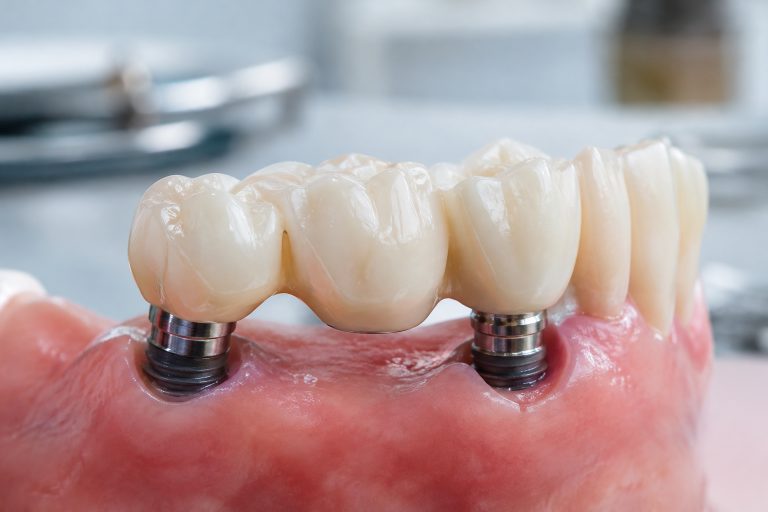
Implant-Supported Bridges
An implant-supported bridge replaces multiple nearby teeth. The number and placement of implants depend on the span being replaced, jawbone quality, bite forces, and the design of the final restoration. Careful planning matters because the bridge must be strong, easy to clean, and comfortable to chew.
Implant-Supported Dentures and Full-Arch Restorations
Removable implant-supported dentures attach to implants for added stability but can still be removed for cleaning. Full-arch treatment uses several implants to support a complete set of upper or lower teeth. Some full-arch restorations are fixed, while others are removable. Neither approach is universal because speech, facial support, access to hygiene, medical needs, and personal preferences all matter.
Who May Be a Good Candidate?
Only an in-person evaluation can confirm candidacy. In general, a dental team will assess gum health, available bone, infection, bite alignment, health conditions that could affect healing, tobacco use, and willingness to attend follow-up visits. Bone loss does not always rule out implants, but it may change the treatment plan. Some patients need grafting or another preparatory procedure before placement.
Patients should share a complete medical history and medication list. Smoking may interfere with healing, and untreated gum disease can threaten the tissues around an implant. Realistic expectations are also important, especially when temporary teeth, staged treatment, or dietary limits are needed.
What the Treatment Process Usually Involves
- Consultation and examination: Review goals, health history, teeth, gums, and bite.
- Imaging and planning: Dental X-rays or 3D imaging may help evaluate bone and identify important anatomy.
- Preparation: Treat decay, gum disease, infection, tooth loss, or bone concerns when needed.
- Implant placement: The implant is positioned in the jawbone using the planned anesthesia or comfort approach.
- Healing: Bone heals around the implant before the final crown, bridge, or denture is completed.
- Restoration and maintenance: The final restoration is placed, then checked during regular visits.
Timelines vary. The healing phase after surgery often takes months, and a general dental implant healing timeline from the University of Rochester Medicine reports that full integration typically occurs over roughly three to six months. Extractions, grafting, health factors, and treatment complexity can extend or alter that schedule.
Healing, Temporary Teeth, and Daily Comfort
After placement, tenderness, swelling, bruising, and temporary diet adjustments can occur. Soft foods may be recommended early in recovery, particularly when several teeth are replaced. Patients should follow their dental team’s instructions for medication, rinsing, brushing, activity, and chewing. A temporary tooth or arch may be available in some cases, but it must be used as directed by the provider.
Call the dental office promptly if pain or swelling worsens, fever or drainage develops, bleeding does not improve as instructed, the bite suddenly changes, or an implant, crown, bridge, denture, or attachment feels loose.
What Can Affect Treatment Cost?
An implant estimate includes more than the implant post. Ask for an itemized plan that identifies diagnostic imaging, extractions, grafting, implant components, abutments, crowns or bridges, temporary teeth, sedation, follow-up visits, and expected maintenance. Cost varies with the number of teeth replaced, the materials used, the complexity, and whether preparatory treatment is needed.
How to Care for Dental Implants
- Brush twice daily with a soft-bristled toothbrush.
- Clean between teeth and around the gumline with tools recommended for the restoration.
- Keep regular cleaning and examination appointments.
- Address gum bleeding, soreness, bad taste, or bite changes quickly.
- Tell the dental team about clenching, grinding, or damage to the restoration.
- Avoid tobacco products, especially during healing.
An implant does not develop a cavity, but the surrounding gums and bone can still develop disease. Crowns, bridges, dentures, screws, and attachment components may also wear, loosen, or need repair over time.
A Practical Way to Move Forward
For St. Louis patients, the next best step is a comprehensive evaluation rather than choosing treatment based solely on a promotional claim or a single price. A clear plan should compare realistic options, explain the healing process and temporary teeth, identify all expected costs, and outline the care needed to protect the final result.