
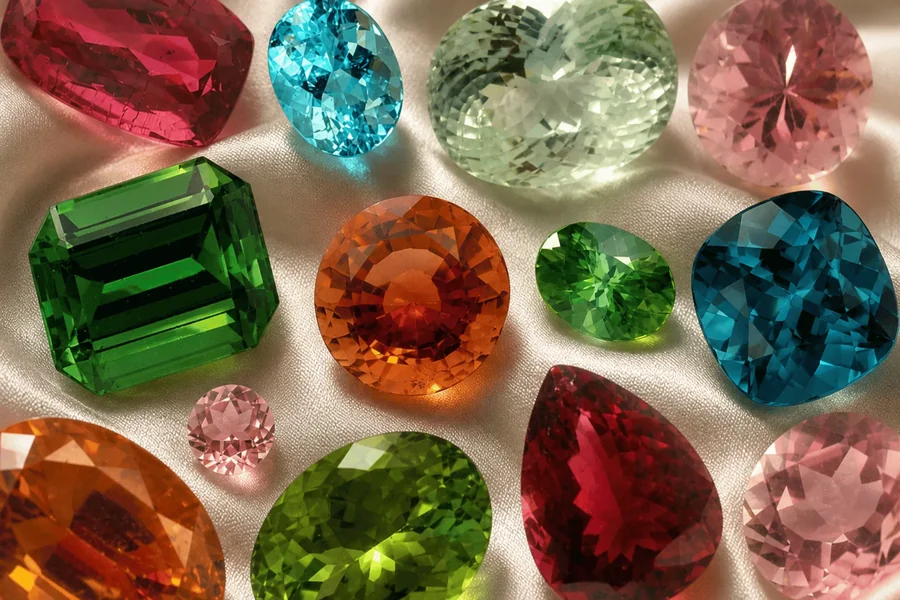
A strand of pink, green, and amber-coloured stones can look lively in a photograph yet feel surprisingly quiet when worn. Rainbow tourmaline offers that flexibility: its effect depends on the colours selected, their arrangement, and the amount of metal or space between them. Choosing a piece becomes easier when you think about the whole design rather than looking for the brightest individual stone.
For a custom order, the most useful starting point is a description of how you want the jewelry to fit into your life. A necklace worn with an open collar asks for different proportions from a bracelet worn at a desk. Colour preferences matter, but so do movement, fastening, and the clothes you reach for most often.
What “rainbow” tells you about a design
Tourmaline occurs in a broad range of colours. In jewelry descriptions, “rainbow” commonly describes an assortment of differently coloured stones arranged in one piece. It does not necessarily mean that each bead contains several colours, or that the finished design follows a strict red-to-violet sequence.
Read the description alongside the photographs. A pastel strand, a dark green and burgundy mix, and a bright combination of pink and yellow can all be described as multicoloured. Ask which colours dominate and whether the photographed strand is the one you will receive. This is especially useful when the maker works with small batches of natural beads.
Use a collection to clarify your preferences
Browsing Canadian Custom Rainbow Tourmaline Jewelry can help you compare multicolour strands, earrings, and personalized gemstone designs; Shokoro Handmade’s linked collection identifies its jewelry as handcrafted in Toronto. Treat the examples as a way to refine your brief, then confirm which alterations are available for the particular piece you like.
The distinction between selecting an option and commissioning a design matters. Choosing a listed chain length may be straightforward, while changing the stone sequence, clasp, or overall construction can require a separate discussion. A useful enquiry describes the result you want and asks the maker what is feasible, rather than assuming every part of a listed design can be changed.
Choose a palette with an obvious centre
Start with two or three colours you already enjoy wearing. If your wardrobe contains navy, grey, and white, you might prefer a strand with cool greens and soft pinks. If you often wear rust, cream, or olive, warmer pinks and golden tones may feel easier to combine. These are styling experiments, not rules about which colours anyone should wear.
Then decide how much contrast you want. A gradual transition between similar tones creates a different rhythm from alternating light and dark beads. One darker stone near the centre can become a focal point, while an evenly mixed strand distributes attention along its length. Ask for a layout photograph if the order involves a specific arrangement.
Consider scale at the same time. Small beads can make a varied palette feel restrained; larger stones give each colour more visual weight. A close-up photograph may exaggerate the apparent size, so compare the stated millimetre measurements with something you can hold or measure at home.
Make fit part of the design brief
Measure a necklace you already find comfortable and note where it sits with your usual neckline. For bracelets, record your wrist measurement and explain whether you prefer a close fit or some movement. The finished length and the internal fit can differ when beads are substantial, so let the maker interpret your measurement for the construction.
A few practical details are easier to settle before ordering:
- State the intended necklace position or preferred bracelet fit, together with your measurements.
- Ask for bead dimensions and the approximate size of any pendant or central feature.
- Confirm the clasp type and whether you can fasten it comfortably without help.
- Specify which colours you want emphasized, reduced, or excluded.
- Check the production estimate, delivery timing, and terms for customized pieces.
For earrings, ask about total drop length and weight if comfort is a concern. A design can look compact from the front while hanging farther below the ear than expected. If you wear scarves or high collars, consider whether moving components could catch against them.
Read metal and stone details separately
The colour of a metal does not tell you its composition. Read whether the components are described as solid gold, gold-filled, gold-plated, or sterling silver, and ask which material is used for the chain, clasp, ear wires, and connecting parts. Comparing those details is more useful than comparing the word “gold” across listings.
If you have a known sensitivity to a particular metal, give the maker that specific information and request component details. Do not rely on a general comfort claim to answer a material question.
For the stones, ask about any disclosed treatments and what natural variation to expect. A handmade piece may differ slightly from a sample photograph. Establish which features are essential to your order and which variations you are happy to accept. For a gift, keep a written record of the agreed measurements and options so the recipient can refer to them later.
Plan care around the entire piece
The Gemological Institute of America’s tourmaline care guide recommends warm, soapy water for the gemstone and advises against ultrasonic and steam cleaning. It also describes tourmaline as having fair toughness, a reminder that resistance to scratching does not make a stone immune to knocks. A bracelet that regularly strikes a desktop needs a different level of care from an occasional pendant.
Check the maker’s instructions before washing the finished jewelry. Thread, adhesives, metal finishes, and other stones may require a gentler method than the tourmaline alone. Avoid prolonged soaking unless the construction permits it, and dry the piece carefully after any approved cleaning.
Store necklaces and earrings separately enough to prevent tangling and rubbing. Remove jewelry before activities likely to pull, strike, or abrade it. If a clasp loosens or a strand begins to show wear, arrange a repair before continuing to wear it. Maintenance is easier when you have retained the original material and construction details.
A personal piece starts with clear choices
A successful rainbow tourmaline design does not need to contain every possible colour or an elaborate custom feature. It needs a palette you enjoy, proportions that suit the way you dress, and construction you can wear comfortably. A clear brief gives the maker useful decisions to work with and gives you a firmer basis for approving the result.
Before committing, review the proposed colours, dimensions, materials, care requirements, and order terms together. When those details agree with your expectations, the finished piece has a better chance of becoming something you choose regularly, with its individuality coming from the choices that matter to you.