
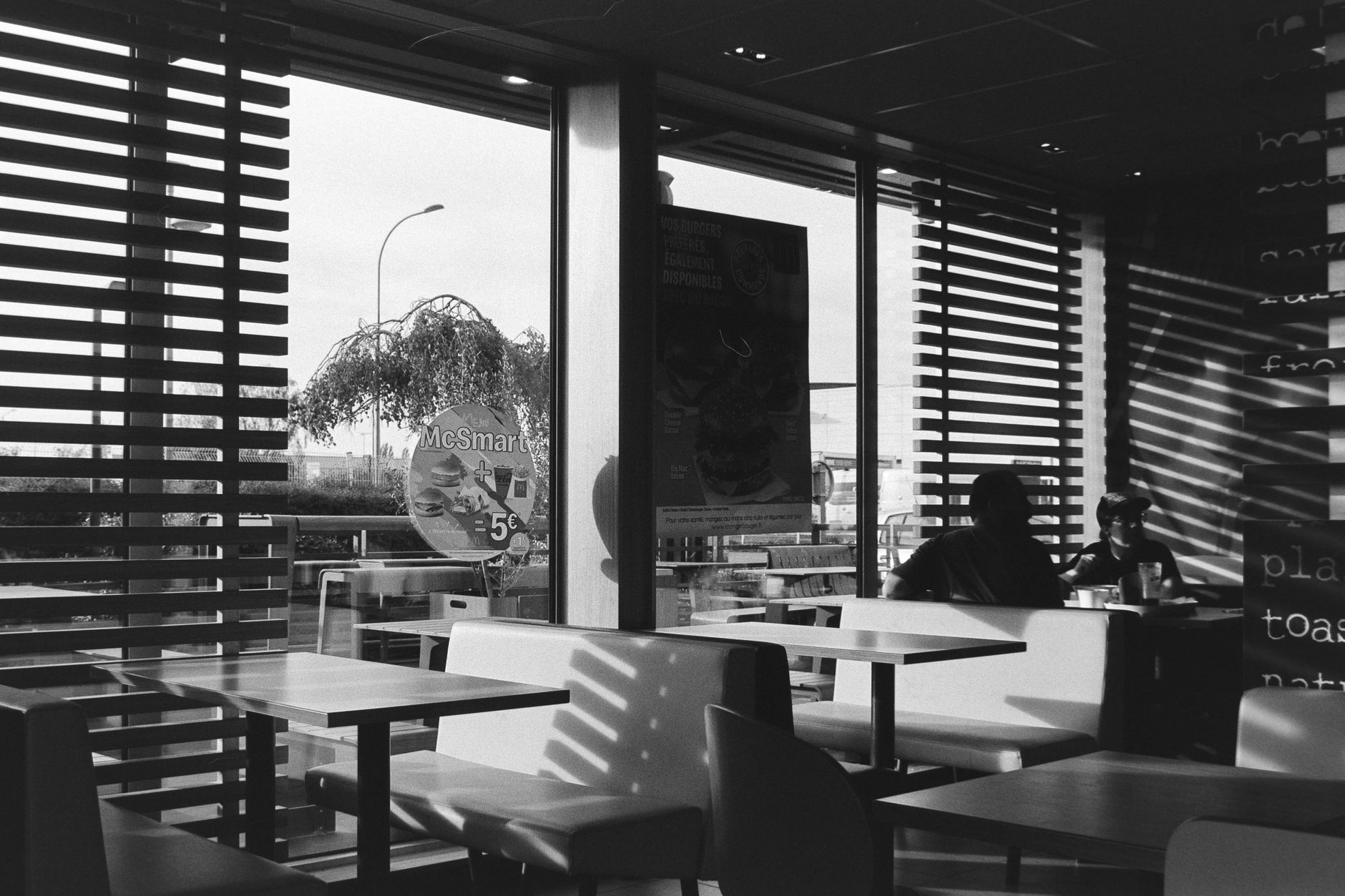
Closing can reveal furniture choices that lunch service conceals. Just when staff are ready to leave, they must move every chair, reach beneath seats, clean around legs, and put the room back together. An awkward detail repeated across the dining room becomes a regular part of that work.
Assessing restaurant chairs for fast-casual dining should therefore include the closing routine before a purchase. A chair that feels comfortable to a customer may still be difficult to handle or clean. The useful comparison follows the work from the last occupied table to a room ready for the next service.
Watch the Routine Before Changing the Chair
Ask the closing team to show the usual sequence. Where do chairs go while the floor is cleaned? Which parts are wiped, brushed, or checked? When does someone have to return to an area because a chair was moved too early?
Observe employees working at their usual pace and record the steps they take. Pay attention to detours and repeated handling. A chair may be lifted out of the way, moved again to reach a dirty patch, and then moved back because another person needs the same space. Ask which step causes the next task to stop. If the floor cannot be cleaned until chairs have moved, note where the chairs wait and whether that position blocks another job. This gives the team a specific sequence to improve instead of a general instruction to close faster.
Separate furniture problems from process problems. A difficult grip is a product issue. A storage position that blocks access to cleaning supplies is a layout issue. An unclear handoff between staff is a working-method issue. Buying a different chair will not necessarily resolve all of them.
Include the opening team in the conversation. A shortcut at closing can leave them with seats to clean again or a room to rearrange before customers arrive. Customer comments deserve a place in that review too. TSC Listens' discussion of seating feedback offers the guest's perspective, which should sit alongside staff observations when comparing a chair's comfort, appearance, and daily care.
Judge the Lift as a Task
Find out the assembled weight of the chair, then consider how staff hold and move it. Weight alone says little about a bulky object with an awkward grip. The starting position, carrying route, repetition, and placement all influence the task.
The NIOSH lifting manual uses a 51-pound load constant under ideal conditions in its lifting equation. That figure is not a general safe limit for lifting chairs. The equation accounts for task conditions, and its scope does not automatically cover every way restaurant furniture is handled. An awkward repeated lift deserves assessment even when the chair weighs far less.
During the sample trial, watch for staff leaning over a table, twisting while holding the chair, or struggling to get a firm grip. Stop if a movement looks unsafe and seek a competent assessment. The demonstration should reveal a problem without requiring an employee to prove they can tolerate it.
Useful observations include:
- Where hands naturally grip the chair.
- Whether the route allows a clear view.
- How high the chair must be lifted or lowered.
- How often the same chair is handled during closing.
Keep those notes with the buying comparison so an attractive finish does not hide a difficult routine.
Verify What Stackable Actually Means
Even a product described as stackable needs specific instructions. Ask which models can be stacked together, how the chairs engage, what protects their surfaces, and which limits apply. Do not decide on a stacking height by counting how many chairs will stay upright.
Request the appropriate transport equipment when the manufacturer provides or specifies it. A cart made for a different chair may support the wrong points or allow movement that the intended equipment would restrain. Staff need a designated storage location and a clear route to it.
CCOHS's guidance on materials flow recommends reducing unnecessary handling and arranging the movement of materials deliberately. Applied to the dining room, the question is whether chairs really need to travel across the premises every night. A closer approved storage position or a revised cleaning sequence may remove work without changing the furniture.
Also plan for an incomplete stack or a chair taken out of service. Staff should know where to put the remaining chairs when some are missing or out of service.
Follow the Soil Into the Details
Look closely at the places a cleaning cloth does not naturally reach. The underside of the seat may need different attention from a decorative opening in the back, a joint near the floor, or the point where upholstery meets the frame.
Check the manufacturer's directions before using the restaurant's usual cleaning products. A surface that tolerates a damp wipe may respond differently to a particular cleaner, concentration, or repeated exposure. Get the supplier's care information before comparing cleaning times.
BIFMA's furniture surfaces guideline addresses durability as it relates to cleaning, sanitizing, and disinfecting. These are separate processes. Calling a chair easy to clean does not establish that it is compatible with every chemical or method used in the restaurant.
Review the cleaning sequence against these details:
- Which surfaces need attention during each close.
- Which tools can reach recesses without damage.
- Whether moisture collects at seams or joints.
- What staff should report instead of trying to scrub away.
A useful care sheet specifies the product and method. A tired employee should not have to interpret vague instructions such as clean as needed.
Check the Floor Contacts and Contact Points
Moving chairs can expose problems at the feet before the frame shows noticeable wear. Inspect glides, caps, and other floor contacts as the manufacturer recommends. Look for missing parts, trapped debris, and uneven contact that makes movement unpredictable.
Choose replacements that are approved for the chair and suitable for the actual floor. A part that happens to fit over a leg may change the chair's contact with the surface. Keep the correct identifiers in the maintenance record rather than allowing a collection of unmarked spare parts to become the repair system.
If closing involves putting chairs on tables, check first that both products permit the method. Establish how the contact surfaces will be protected and cleaned afterward. Another restaurant's practice does not establish permission. A chair back, seat, or arm can transfer dirt to a surface that will later hold food and tableware.
The best routine may leave chairs on the floor while cleaning follows an organized sequence. Choose the method around the actual furniture and room.
Compare Complete Closings
A sample chair can feel easy to move in a showroom. Test it through the full approved closing routine in the restaurant, with the staff who will use it and the equipment they actually have.
Compare more than the time taken. Note whether a chair needed repeated handling, whether cleaning reached difficult areas, and whether staff could return it to position without rearranging the layout afterward. Record differences in staffing and how dirty the room was so the comparison stays fair. Keep a separate record for each chair tested, identifying the model, cleaning method, approved handling method, and storage location. This lets the purchasing manager connect staff comments to a specific setup instead of relying on a remembered impression of which chair seemed easiest.
Do not promise labor savings on the strength of a short trial. Use the observations to identify a better process and decide what further trial is needed. An improvement that relies on the strongest employee or an unusually quiet evening may not hold during normal service.
Buy for the End of the Shift Too
The final choice needs to work for the person sitting in the chair and the person caring for it. Keep the handling instructions, cleaning guidance, replacement-part details, and room arrangement in the same file. Train the team on the agreed procedure before the new chairs become another improvised routine.
A good closing procedure is straightforward to explain and repeat. When the chair supports that work, staff can give less attention to handling awkward objects and more to leaving the dining room clean, orderly, and ready for customers again.