

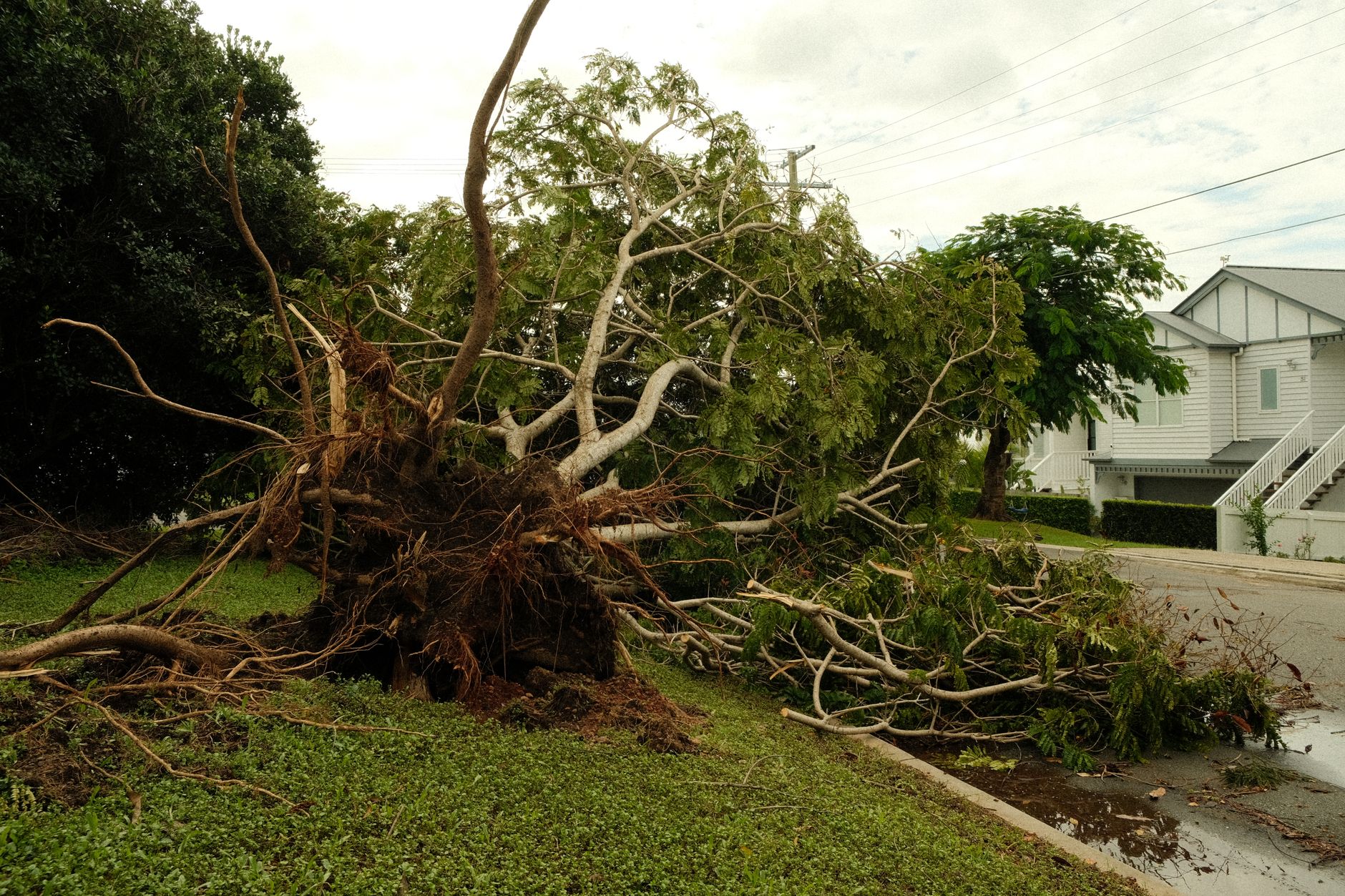
Ninety percent of the storm damage I have crawled across in the last few years looked like nothing from the curb. A roof can take a beating from hail, wind, and driving rain and still hold its line perfectly from the street, which is exactly why so many homeowners wait until a water stain shows up on the ceiling to do anything about it.
The good news is you don't need a ladder or a roofing background to catch the early signs. You need twenty minutes, a pair of binoculars, and a habit of walking your property after every major storm. What follows is a practical tour of the places damage hides, what each clue actually means, and when it is time to bring in help.
Why Storm Damage Almost Never Announces Itself
Asphalt shingles are designed to shed water, but a hailstone the size of a marble can knock the protective granules off a shingle without cracking it. The shingle still looks like a shingle. Underneath, though, that bald patch absorbs water like a sponge, and the damage spreads slowly through freeze and thaw cycles.
That delayed timeline is the whole problem. According to the National Weather Service, severe thunderstorms can produce hail, damaging winds, and flash flooding all within the same storm system, which means your roof may have taken three different kinds of hits in one afternoon. Each one leaves a different signature, and none of them are visible from your driveway.
Start in Your Yard, Not on Your Roof
Before you ever look up, look down. Your yard tells the story first.
Walk your property and note these things
- Shingle granules collecting in gutters, at downspout outlets, or in dark piles on the grass
- Bent gutters, dented downspouts, or gutter sections pulled away from the fascia
- Dings in your AC unit, mailbox, grill, or fence line
- Branches on the roof, even small ones
- Scuff marks or dents in your car's hood or roof if it was parked outside
Those dents on soft metal are your best hail evidence. If your AC unit looks like someone hit it with a hammer, your shingles almost certainly took the same treatment.
The Roof Clues You Can See From the Ground
Stand back and work across the roofline slowly with binoculars. You are looking for interruptions in the pattern.
Missing shingles are obvious. Dark patches where shingles look bruised or matte are less obvious but often more telling, because that dullness means granules are gone. Check the ridge line, the valleys, and the areas around vents and chimneys, since those are the spots where wind gets underneath and pries material loose first. Look at the edges too, especially on the side of the house where the storm came in. Wind damage loves corners.
If your roof is metal, listen for dents you can see as dimples in the panels and check for panels that have shifted or pulled away from their fasteners. If you have siding, walk the perimeter and look for cracks, holes, or pieces that have popped loose. Siding damage is often the first visible sign of a storm you slept through.
Step Inside and Read the Ceiling
Water finds the path of least resistance, so the interior clue rarely appears directly under the roof damage. Check the attic first if you can get up there safely. Look at the underside of the roof deck for dark staining, and feel for insulation that is damp or compressed.
Then walk every room and look at the ceilings with fresh eyes. Brown rings, bubbling paint, and hairline cracks that were not there last month are all worth writing down. Take a photo with your phone and date it. That timestamp matters more than you think later on.
When It Is Time to Call Someone
Here is my honest take: climbing on a wet, storm damaged roof is how people get hurt. If you see granules in the yard, more than a shingle or two missing, or any water staining inside, stop inspecting and start calling. Roof work is one of the most dangerous jobs in the country, and the Bureau of Labor Statistics tracks it that way for a reason.
A good contractor will walk the roof, document what they find with photos, and explain the difference between wear and storm damage. If you are in the St. Charles County area, a licensed crew like roof strom damage repair in St. Peters, MO can handle the inspection and give you a straight answer on whether you are looking at a repair or a replacement. The key word is document. If someone wants to hand you a number without photos, keep walking.
A Simple Checklist You Can Run Today
I keep this list taped inside my garage and run through it after every significant storm. It takes about twenty minutes and it has saved me from two expensive surprises.
- Walk the yard. Note granules, dented metal, and branches.
- Inspect gutters and downspouts for bends and separation.
- Use binoculars on the roofline. Check ridges, valleys, vents, and edges.
- Look at siding, windows, and trim on all four sides of the house.
- Check the attic for staining and damp insulation.
- Walk every room and note any new ceiling marks with dated photos.
- Write down the storm date while it is still fresh in your memory.
Document Everything, Because Timing Matters
Insurance claims and repair decisions run on evidence and dates, not on how strongly you remember the storm. The Federal Emergency Management Agency consistently advises homeowners to photograph damage and keep records before making repairs, because that documentation is what supports a claim later.
So take the photos. Save the receipts if you pay for a temporary fix. Write down when the storm hit and when you first noticed the problem. It feels like busywork until the day you need it, and then it is the only thing that matters.
Quick reference: what each clue usually means
|
What you see |
What it likely means |
|
Granules in gutters or yard |
Shingle wear or hail damage |
|
Dents in AC unit or gutters |
Hail impact, check roof closely |
|
Missing or curled shingles |
Wind uplift, possible seal failure |
|
Ceiling stains or bubbling paint |
Active water intrusion |
|
A single isolated dark patch |
Lost granules, likely spreading |
Don't Wait for the Next Big Storm to Find Out
The repairs that hurt the most are the ones that sat quietly for six months. A bruised shingle becomes a soft deck. A soft deck becomes a ceiling stain. A ceiling stain becomes a weekend you did not plan to spend that way.
So the next time the sky turns that particular shade of green, don't just watch it from the window. Give it a day, then walk your property with the checklist above. If something looks off, get eyes on it before the next rain. When was the last time you actually looked at your roof, rather than just under it?