
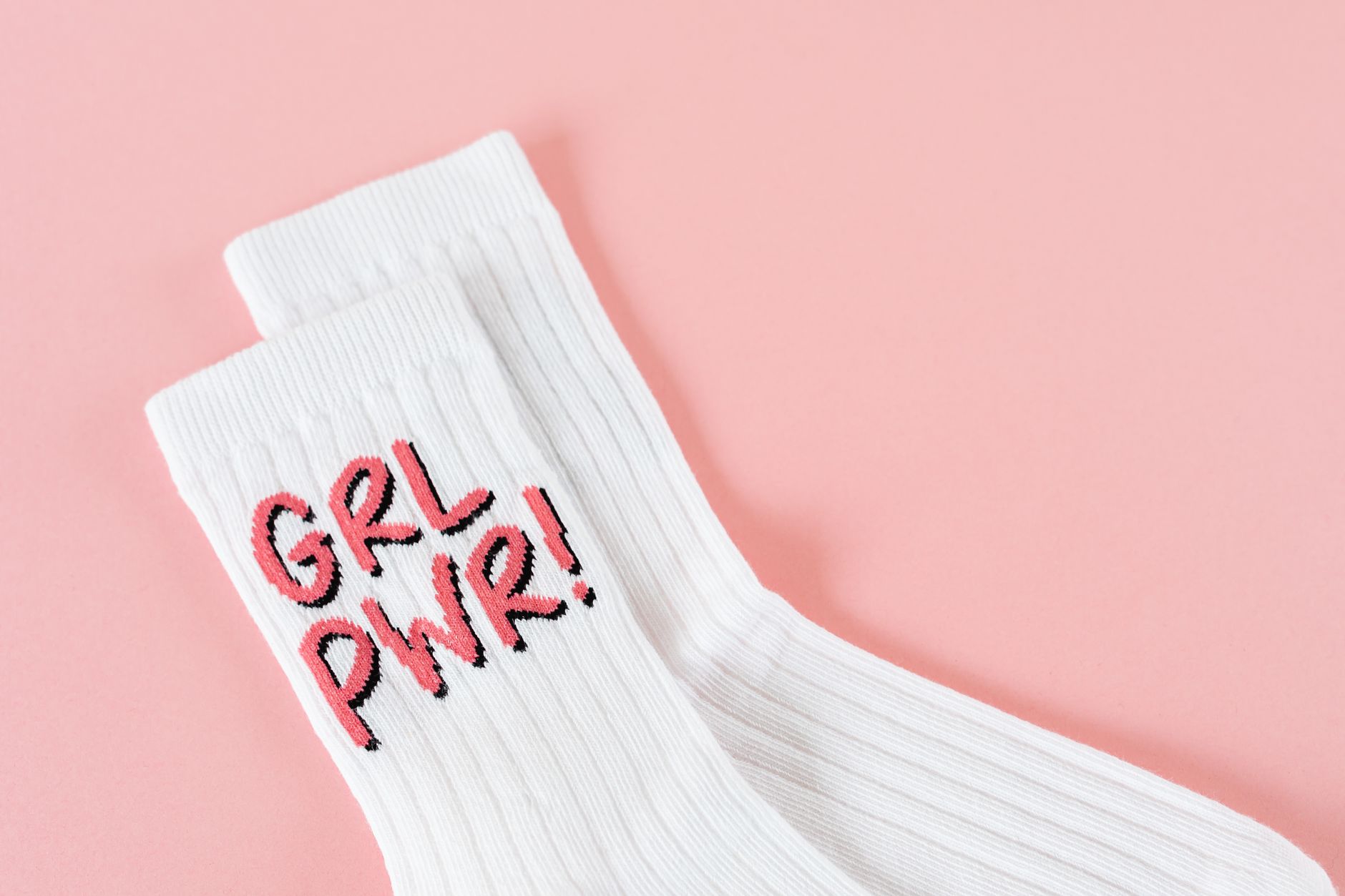
A custom sock design has to work on a moving, curved surface. Artwork that looks sharp on a flat screen can become stretched around a calf, interrupted at the heel, or difficult to read near the ankle. Good results begin with understanding the finished garment, rather than treating it as a small poster.
Printed socks can serve as merchandise, gifts, event items, or part of a fashion collection. Each purpose calls for different choices about graphics, materials, fit, and packaging. A clear brief and a representative sample help bring those choices together before an order moves into production.
Start with the purpose and wearer
Decide who will wear the socks and where they will use them. A bold novelty design can suit a gift collection, while an understated repeated motif may work better for everyday wear. For an event, the design might need to communicate a theme without depending on tiny lettering.
Consider how much of the garment will be visible. A crew sock offers a different design area from an ankle style. Graphics positioned high on the leg may disappear under trousers, while artwork on the foot spends much of its time inside a shoe. Place the most important visual element where the wearer is likely to show it.
For businesses exploring printing socks, Kaite Socks presents custom sock production, design, and packaging services on its website. That provides a starting point for a supplier discussion, while the actual decoration method, materials, and order specifications should be confirmed for the proposed project.
Clarify how the design will be made
The word printed is sometimes used loosely to describe any patterned sock. A design knitted into the fabric uses colored yarns as part of the construction. A printed design applies color through a separate decoration process. These approaches can create different visual results, and a supplier should explain which one is being proposed.
Ask whether the method suits the chosen fiber blend and artwork. Fine details, large color areas, photographic imagery, and repeated logos may require different solutions. Avoid assuming that a process available for one garment or fabric will produce the same result on another.
Discuss coverage as well as appearance. Find out whether the design can continue around the leg, how seams or shaping affect placement, and whether the heel and toe require special treatment. A mockup should show these areas clearly instead of displaying only the most attractive side.
Prepare artwork for the sock shape
Use the manufacturer’s template when available. It should identify the areas that can carry artwork and any zones where details may be interrupted or distorted. Keep essential lettering and logos away from uncertain boundaries unless the sample demonstrates that the placement works.
Simple graphics are often easier to evaluate than crowded compositions. A small logo surrounded by empty space can remain readable when the sock stretches. Repeated patterns can distribute visual interest across the garment without requiring one image to align perfectly with every contour.
Ask for the required artwork format, dimensions, and color instructions. Supply clean source files rather than a screenshot when possible. If precise brand colors matter, agree on how the supplier will match them and what physical reference will be used. Screen previews are useful for layout but should not be the sole basis for approving color.
Balance decoration with everyday comfort
The base sock affects whether the finished product gets worn. Specify the intended size range, leg height, cushioning, cuff, and toe construction before finalizing the graphic. A visually appealing design does little for a sock that slides down, feels bulky in shoes, or fits inconsistently.
Material selection should reflect the intended use and care routine. Fiber blends can affect texture, stretch, drying behavior, and the way a decoration method performs. Ask the supplier to explain the proposed composition and evaluate a sample rather than infer performance from one fiber name.
Compare the sock both relaxed and worn. Artwork may change noticeably under tension, and the fabric can behave differently around the heel and calf. Check whether the cuff feels secure without becoming uncomfortable and whether the foot fits the footwear the product is intended to accompany.
Use a sample to answer specific questions
A sample is most useful when it represents the planned production method and materials. A previous customer’s sock can show general workmanship, but it cannot prove how new artwork will look. Ask which parts of the sample match the final specification and which are substitutes.
- Inspect logo clarity, small lettering, and pattern placement on both socks.
- Compare color and coverage in relaxed and stretched areas.
- Check the cuff, heel, toe, seams, and consistency of the pair.
- Try the intended size with appropriate footwear and movement.
- Evaluate appearance and fit after washing according to the proposed care instructions.
Record feedback in concrete terms. Instead of asking for better quality, identify the issue: the lettering needs more space, the cuff is too tight, or the color differs from the approved reference. Keep a written approval record and a reference sample so later production can be compared with a clear standard.
Plan the order beyond the artwork
Confirm the minimum order quantity, size breakdown, packaging, and expected production schedule. Ask whether quantities are counted by total pairs, design, color, or size. Those distinctions can affect both the cost and the practicality of a small collection.
Request a quote that identifies what is included. Design preparation, sampling, packaging, shipping, and other charges may be handled separately. Compare suppliers using the same specification so a lower headline price does not conceal a different product or an omitted service.
Packaging should support the intended sale or distribution. A simple band may be enough for an event gift, while retail merchandise may need more product information. Ensure labels describe the actual fiber composition, size, and care instructions, with applicable market requirements checked before distribution.
Build time for revisions into the schedule. Sample approval, production, inspection, and transport are separate steps, and a last-minute artwork change can affect several of them. An agreed milestone calendar makes it easier to identify delays before an event or launch is at risk.
Make the finished pair the design standard
Successful custom socks combine readable artwork with a base garment suited to the wearer. The project becomes easier to manage when the decoration method, material, fit, and packaging are described in one consistent specification.
Approve the physical result with the same care given to the original graphic. A well-planned design should remain appealing when stretched, worn, and washed. That is what turns a custom image into a product people will choose to use.