

Introduction
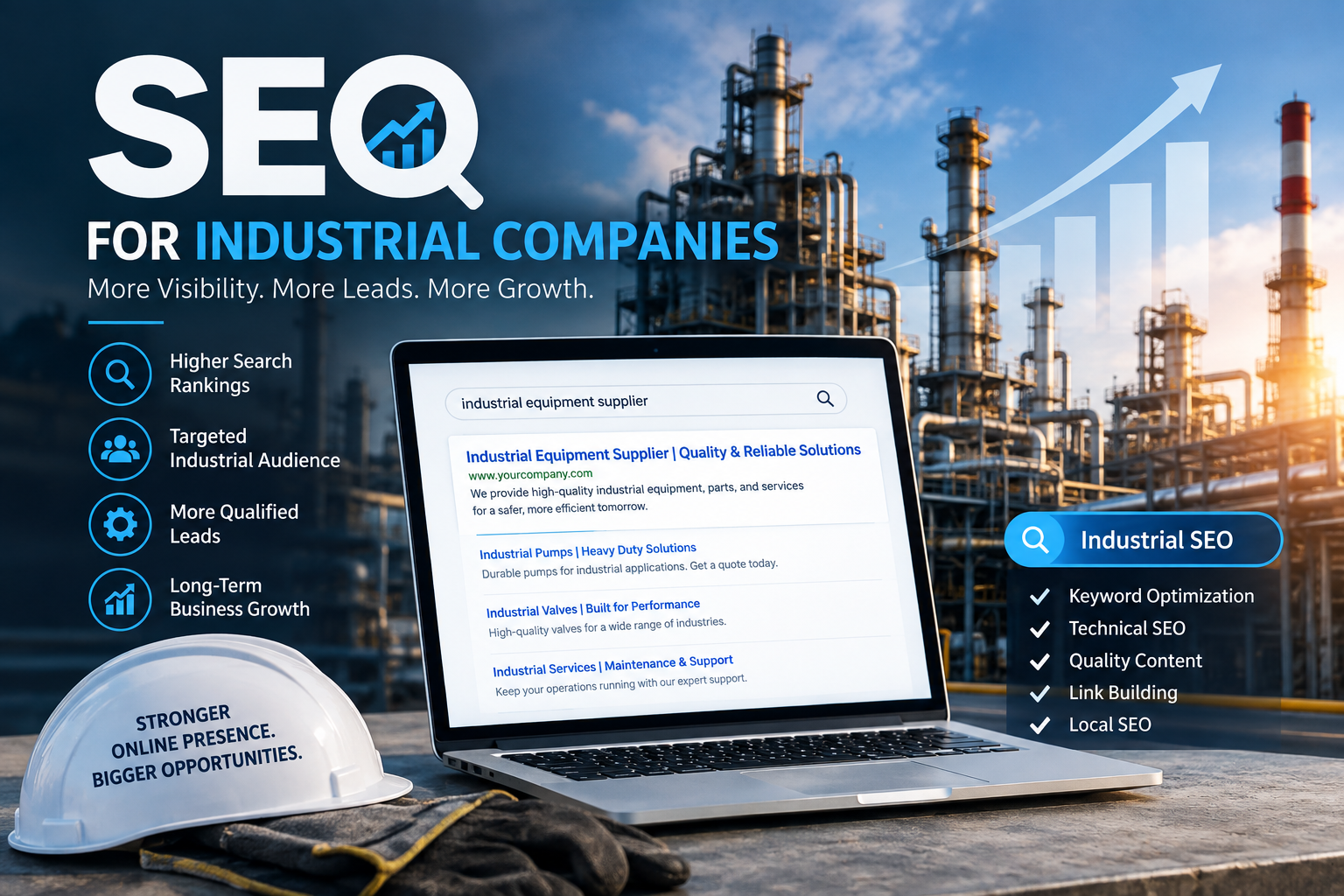
Industrial buyers search online just like everyone else, even for specialized products like welding gas in Toronto or a piece of equipment most people have never even heard of. The difference is that industrial searches come in smaller numbers but far more specific, which means showing up for them actually matters more, not less. This guide breaks down why SEO deserves real attention from industrial companies, and how to think honestly about the cost of getting it right.
Industrial Buyers Search Differently, But They Still Search
A plumber or a restaurant gets searched by thousands of people a month, spread across broad, generic terms. An industrial supplier selling welding gas in Toronto, by comparison, might only see a few hundred relevant searches a month — but nearly every single one comes from someone actively trying to solve a real, immediate problem. A supplier who ran out of stock. A new facility opening nearby. A buyer comparing options before a contract renewal. Lower search volume doesn’t mean lower value here. Honestly, it usually means the opposite, since each search represents a buyer much further along in an actual purchasing decision than a casual browser would be.
This is exactly why ranking well for specific, niche industrial terms tends to produce a stronger return than most companies expect going in. A buyer searching for a specific gas blend or a specific piece of equipment isn’t browsing casually — they’re trying to solve a problem right now. Whichever supplier shows up clearly and credibly in that moment has a real edge over one that’s harder to find. Working with an agency like https://version.so/, which specialises in SEO strategies that improve visibility across Google and AI-powered search platforms, can help industrial businesses reach these high-intent buyers when they’re actively looking for solutions.
Why Local SEO Matters More Than Most Industrial Companies Assume
Industrial buyers overwhelmingly prefer a supplier they can actually reach quickly — same-day delivery, a shorter shipping distance, or just someone familiar with local regulations and logistics. That preference makes local search visibility, not just general visibility, one of the most valuable things an industrial company can invest in. Showing up when someone searches for a supplier in their specific city or region often matters more than ranking for some broader national term that draws in buyers who were never going to order from you anyway.
This is also where working with a company like Local SEO Search tends to pay off, since local search optimization for an industrial business looks pretty different than it does for a typical retail business. Citations, location-specific content, a well-maintained business profile — all of it matters, but so does technical content that actually speaks to an industrial buyer’s real concerns. Certifications, safety documentation, delivery logistics. Not generic marketing language that never quite addresses what these buyers are actually evaluating in the first place.
Why This Work Takes Longer Than Most Companies Expect
SEO for an industrial company builds slowly, and it’s worth setting that expectation honestly rather than promising faster results than the work actually produces. Rankings for specific, niche terms typically take several months to build meaningfully, especially if the company’s website previously had little content addressing these searches directly. That slower timeline is exactly why SEO tends to outperform paid advertising over the long run — rankings keep working long after the initial investment, while paid ads stop producing traffic the moment the budget runs dry.
Managing Cash Flow While Investing in Growth
Marketing spend, inventory costs, and supply purchases don’t always land in the same month as revenue, and that timing mismatch is just a normal part of running an industrial business, not a sign something’s gone wrong. Most companies handle this with a business line of credit or short-term financing built specifically for working capital gaps. Worth being cautious here, though: if a cash flow gap ever pushes you toward something marketed as a payday fast loan, treat that as a genuine last resort, not a convenient shortcut. These products carry steep interest rates built for very short repayment windows — not the kind of ongoing marketing or supply investment industrial growth actually requires.
Before considering financing of any kind, compare the total repayment cost against a standard business line of credit or a loan from your bank, since the difference in cost between these options is often significant. Confirm any lender you’re considering is properly licensed before applying anywhere, and treat marketing spend, SEO included, as a planned annual cost to budget for in advance, rather than something to fund reactively during a cash crunch.
Choosing an SEO Partner for an Industrial Business
Not every SEO provider actually understands how industrial buyers search, and that gap matters more here than it does for a typical consumer business. Ask a potential partner — whether that’s Local SEO Search or someone else — how they approach technical and niche industrial terms specifically, rather than assuming general local SEO experience just transfers over directly. Ask how they measure success too, since ranking position alone means very little if it isn’t tied to actual inquiries or orders coming through as a result.
A reasonable SEO engagement should include clear reporting on what’s actually working, an honest timeline that reflects the slower nature of this kind of growth, and a real willingness to explain their approach instead of treating the whole process like a black box. If a provider promises fast results for competitive industrial terms, that’s worth questioning rather than just taking at face value.
Frequently Asked Questions
Is SEO worth it for a company with a small, niche customer base?
Often, yes — a small number of highly specific searches from serious buyers can produce more value than a much larger volume of generic traffic ever would. Niche industrial terms tend to have less competition too, which makes strong rankings more achievable than they might be in a broader consumer market.
How long does it take to see results from industrial SEO?
Most companies see meaningful movement over several months rather than weeks, especially for specific technical or local search terms. It builds slower than paid advertising, sure, but results tend to compound and last a lot longer once they actually take hold.
What’s a safer way to fund marketing costs than a fast loan?
A business line of credit, set up before you actually need it, is almost always cheaper and more flexible than short-term financing arranged during an active cash crunch. Budgeting marketing as a planned annual cost, rather than funding it reactively, also cuts down on how often financing becomes necessary at all.











1 thought on “Why Is SEO Important for Industrial Companies?”