
When wind, ice, lightning, or heavy snow damages a property in Battle Creek, the safest response usually involves more than one phone call. A fallen tree can affect power lines, roofs, insurance claims, water intrusion, and driveway access simultaneously. This roundup connects the specialists who help homeowners, landlords, businesses, and property managers address each stage in the right order. It also emphasizes an important priority: protecting people from immediate hazards takes precedence over restoring convenience, removing debris, or beginning cosmetic repairs.
Because storm scenes can change quickly, residents should treat every damaged tree, hanging limb, and partially blocked entrance as potentially unstable until it has been evaluated. Clear communication among household members, tenants, neighbors, utility representatives, insurers, and contractors can reduce confusion during a stressful recovery period and help prevent duplicate or unsafe work.
Brawner's Tree Service
For hazardous limbs, fallen trunks, blocked driveways, or trees resting against a structure, tree service in Battle Creek and Nearby is a practical starting point for property owners who need local, specialized help. Property owners who want to understand the process before a crew arrives can see how emergency tree removals are handled, including why crews assess tension, drop zones, structures, and nearby utilities before making the first cut. That assessment matters because a tree can look stable from the ground while its trunk is split, its roots are lifting, or branches are holding significant pressure against a roof, fence, vehicle, or neighboring tree. Acting promptly after storm damage or discovering a hazardous tree can help reduce the risk of additional property damage and improve safety for everyone on the site. Working with an experienced local tree service also helps ensure that removals, cleanup, and any necessary follow-up care are performed with appropriate equipment and in accordance with established safety practices.
Location: Brawner's Tree Service | 329 Buick Dr, Battle Creek, MI 49015 | (269) 371-5449
Why It's On The List
- Brawner's reports 45 years of combined tree-care experience, a meaningful measure of hands-on knowledge for complex storm situations.
- The company has operated since 2010, providing more than 15 years of local operating history by 2026.
- Its advertised 24/7 emergency service directly addresses hazards that cannot wait for normal business hours.
- Services include emergency tree removal, trimming, stump grinding, land clearing, brush hogging, forestry management, shrub work, firewood, and tree health care.
- Brawner's also advertises licensed and insured work, free estimates, financing options, a BBB A+ rating, and discounts for seniors, teachers, first responders, and military members.
Its role is not simply to cut wood. In a spring windstorm, for example, a mature tree across a driveway may require a site assessment, controlled removal, debris hauling, and stump work so roofers, utility crews, insurers, or repair contractors can safely access the property. Its "No Leaf Left Behind" cleanup commitment also reflects the fact that storm recovery should leave a site usable, not merely cleared enough to move on. For commercial properties or rental homes, prompt removal can also help restore access for tenants, deliveries, customers, emergency vehicles, and maintenance crews.
Consumers Energy
Why It's On The List
Consumers Energy covers the utility-safety portion of the response. A branch touching a wire, a damaged service drop, or a downed line is an electrical emergency, not a tree-trimming project. For guidance on electrical safety around downed lines, the City of Detroit's downed power lines safety guidance instructs residents to stay at least 30 feet away from downed lines and call 911 immediately.
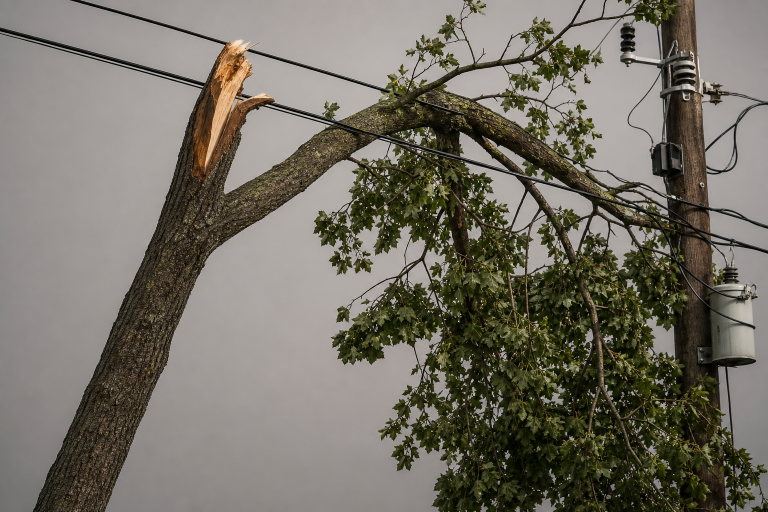
For a split maple leaning toward a service line, the right sequence is to keep people and pets away, report the hazard, wait for utility direction, and then arrange private-property tree work after the area is confirmed safe. This division of responsibility protects residents and allows a tree crew to focus on removal, rigging, hauling, and cleanup without working around an unverified energized line. It is also wise to avoid touching fences, puddles, vehicles, branches, or other objects that may be in contact with a line, since electricity can travel through unexpected paths.
State Farm
Why It's On The List
State Farm represents the documentation and insurance layer of storm recovery. Coverage depends on the policy, cause of loss, damaged property, deductibles, and stated limits. In general, a tree that damages a covered home, garage, fence, or other structure may be treated differently from a tree that falls harmlessly in an open yard.
Before extensive non-emergency work begins, take wide and close-up photos from a safe location, note the storm date, retain written estimates, and save receipts for temporary protection. Ask specific questions about emergency removal, tarping, debris hauling, roof repairs, water mitigation, and whether each cost is considered separately. A qualified tree company can make the property accessible, while the insurer can help determine how the claim is handled. Keep a simple written timeline of calls, inspections, temporary repairs, and contractor visits as well; organized records can make it easier to explain what happened and why urgent work was needed.
SERVPRO
Why It's On The List
SERVPRO handles indoor restoration when a fallen limb opens a roof, breaks windows, or lets rain into walls, insulation, floors, and furnishings. With more than 2,400 locations across the United States and Canada and 24/7 emergency availability, the company offers water extraction, structural drying, board-up support, mold remediation, contents restoration, and reconstruction services.
The partnership is sequential. Brawner's Tree Service addresses the dangerous outdoor tree or limb first. Then a restoration provider can help dry affected areas and limit secondary damage. If a limb breaks through a roof overnight, the homeowner may need tree removal, temporary roof protection, moisture control, and later repairs. One provider does not replace the other. Fast drying and temporary containment can be especially important because moisture may continue moving beneath flooring, behind wall surfaces, and into insulation even after visible standing water is gone.
The Home Depot
Why It's On The List
The Home Depot provides the preparedness and temporary materials layer. Heavy-duty tarps, rope, flashlights, batteries, phone chargers, gloves, eye protection, fuel containers, cleanup bags, and waterproof document storage can help a household stay organized while waiting for qualified help.
These supplies have clear limits. Homeowners should not climb a storm-damaged roof, cut a leaning tree, or attempt to move a branch under tension. Michigan's tree removal safety guidance reinforces why large limbs, unstable trees, and utility-adjacent damage require careful professional handling. Temporary protection can reduce exposure, but it should never create a second emergency. For example, supplies are most useful when used from a safe ground-level location or by a qualified contractor, rather than as a reason to work near broken limbs, slippery roofs, damaged siding, or electrical equipment.
How This Storm-Response List Was Created
This resource roundup was built around the practical question many residents ask after severe weather: "Who should I call first, and who handles the next problem?" Each organization was selected for a distinct role in the recovery chain, including hazardous tree removal, utility safety, insurance documentation, indoor restoration, and emergency supplies. Local availability, stated emergency capabilities, relevant scale, service breadth, safety responsibilities, and the ability to work alongside other specialists were all considered. Brawner's appears first because dangerous trees are the central outdoor hazard in this Battle Creek-focused guide.
What To Do After A Major Battle Creek Storm
- Move people and pets away from unstable trees, damaged buildings, and downed lines.
- Call 911 for immediate danger, blocked roads, fire, or potentially energized wires.
- Report outages and utility hazards to Consumers Energy.
- Photograph damage from a safe distance before cleanup changes the scene.
- Contact your insurer and retain estimates and receipts.
- Call Brawner's Tree Service for hazardous trees, emergency removal, trimming, stump work, and cleanup.
- Arrange restoration support if water, mold, smoke, or structural damage affects the interior.
As conditions allow, avoid entering rooms with sagging ceilings, exposed wiring, standing water near electrical outlets, or obvious structural movement. Check on vulnerable neighbors only when it is safe to do so, and do not assume a roadway, sidewalk, or driveway is clear simply because the storm has passed. Damage can shift as ice melts, winds continue, and saturated soil loses its ability to support a damaged tree.
A reliable storm response is built on cooperation, not competition. Brawner's Tree Service provides the local tree-care expertise that helps make damaged properties safer and accessible again. Consumers Energy, State Farm, SERVPRO, and The Home Depot each address a separate but connected need. Working with the right specialist at the right time helps Battle Creek property owners protect people, document losses, limit further damage, and recover with greater confidence.