
The first time you start a new crochet project is a special time. However, exploring the many possibilities and options of what you can find at a craft shop, or simply searching online, can seem overwhelming. There is an abundance of different types, colours, and sizes of yarn. You will find yourself a lot easier on your way to learning when you select the proper yarn. Even the incorrect yarn can cause discomfort to your hands, make your stitches difficult to see and even split. A good yarn should be smooth and allow you to see the stitches.
As you will understand the fundamental things like the material of the yarn, its thickness and even tightness, you will have confidence in your choice. This is how this knowledge will be helpful to you regardless of your experience level. Maybe you want to start making a simple dishcloth, lightweight scarf or an amigurumi toy. Just keep in mind these essential points while buying knitting yarn online. This will make you confident in your new hobby.
Why Materials Matter for Beginners
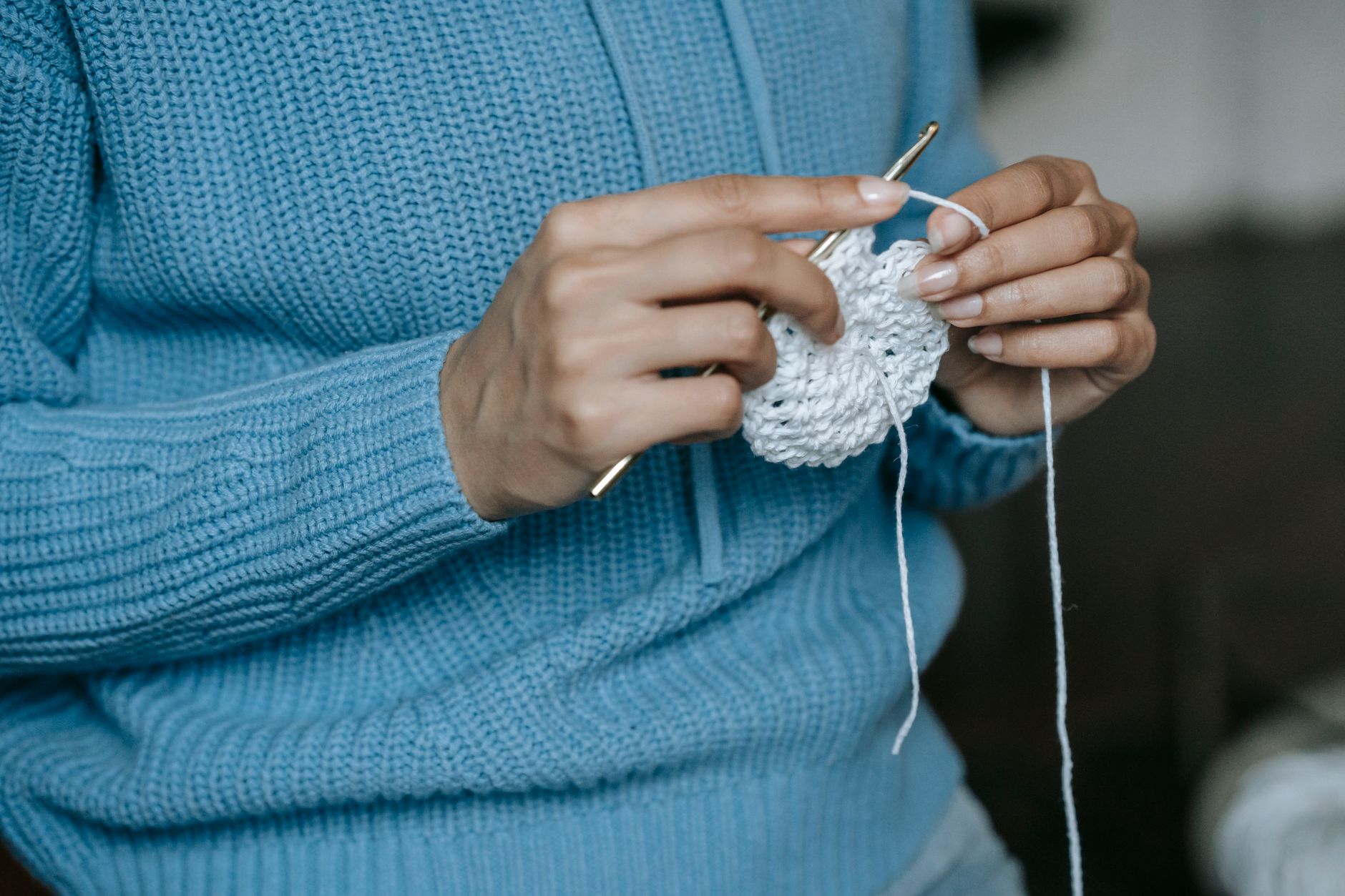
Crochet is not the same as knitting. In knitting, more than one loop is active on a long needle. In crochet, however, one and only one loop is active at any given time, and a crochet hook is used. The feel of the yarn, its extensibility and visibility of your stitches are now taken into account when you first practice and make things differently.
Industry research shows that it is good to use easy-to-use supplies when you first start.
- According to a survey conducted by the Craft Yarn Council, more than 73% of new crafters give up on their first project. The main reason they give is that it's hard to see the stitches, or the yarn breaks while they work.
- The popular market data indicates that the most popular fibers are acrylic (42%) and cotton blends (31%). These yarns are inexpensive, easy to care for and pick up on every stitch.
1. Opt for Medium-Weight Yarns (Worsted or DK)
Yarn thickness, which is known as "weight" as well, comes in numbered weights from 0 (Lace) to 7 (Jumbo). For the first project, you should choose a weight somewhere in between.
- Category 4: It is the best one to choose for starters. It is thick, and you can easily see every loop. It works fast and doesn’t cause hand cramps.
- Category 3: It is perfect for light projects like baby blankets. It is flexible and easy to use.
Why Avoid Extreme Weights First?
Very delicate lace-weight yarn requires very even tension and tiny hooks, which makes it difficult to observe individual loops. At the same time, the bulky roving is very heavy and bulky if one lacks sufficient practice. Mistakes made with such yarn may remain unnoticed until additional rows are knitted.
2. Pick Smooth, High-Visibility Fibers
How the yarn is spun will affect the ease with which the hook glides through the loops of the yarn. Novice crocheters perform best when using smooth and sturdy yarns. The yarns remain firm, even when stretched or tugged.
|
Fiber Type |
Stitch Visibility |
Elasticity & Glide |
Recommended For |
|
Acrylic |
High |
Excellent spring; glides easily on aluminum hooks |
Practice swatches, scarves, blankets |
|
Cotton |
High |
Low elasticity; holds clear stitch boundaries |
Washcloths, coasters, market bags |
|
Wool Blends |
High |
Superior elasticity and warmth; soft hand feel |
Winter accessories, garments |
|
Bouclé / Chenille |
Low |
High friction; hides stitch definition entirely |
Advanced plushies (Avoid for project #1) |
3. Choose Light, Solid Colors
Choosing colors isn't simply about looks. It is a helpful tool which can be used to learn.
- Cream, soft green, sky blue, or yellow shades are good for reflecting light (light pastel and bright solids). It is easy to see the “V” shapes of stitches that you put in with your hook at the top.
- Dark colors that should be avoided: Navy blue, charcoal and black absorb the light and leave the stitch loops unnoticeable.
- Varied and Novelty Yarns: These are yarns that have more than one color or have some interesting variation, which can make it difficult to count stitches or identify missed stitches within the row.
4. Check the Ball Band Label Specifications
All yarns purchased from stores are wrapped in a paper label. A ball band is a type of label. It provides you the essential information of your project.
- Upon inspection of the label, there are three key facts that you will notice.
- The preferred size of the hook is stated alongside the crochet hook illustration, such as 5.0 mm/H-8. The size of the hook will help you easily get away from stiff or tight crochet.
- Dye Lot Number: In case you use more than one ball of yarn, be sure that all the balls will have the same look by using the Dye Lot Number.
- Care Instructions: Inspect to find out whether you will need to wash your work by hand or put it in the washing machine.
5. Select a Plied Yarn with Tight Twist
Twisting individual strands in a similar manner forms yarns. The tighter they are twisted, the less likely they are to split when caught by a sharp hook.
- Tightly Twisted Plies: Yarn over and pull through the strand, working it together. This will help you maintain a steady pace.
- Single-Ply / Loose Roving: With this type, the strand may break into raw fibers if you hook onto an edge. This results in uneven tension and messy stitches.
It is wise to test something before purchase – between finger and finger. Twist slightly to see if it retains its shape. This will let you know whether it's of good quality.
Master Your Starter Projects
It is easy to begin your fiber arts adventure if you choose the right fiber type, its weight, color, and twist. You will be able to see your stitches clearly if you choose smooth acrylic or cotton yarn that has worsted weight and light colors. You will find it easy to learn about the basics. If you consider these aspects before purchasing the best knitting yarn online, you will ensure that every stitch will go well and every creation time will be inspirational for you.